What Is a Birth Chart — and Why Should You Care?
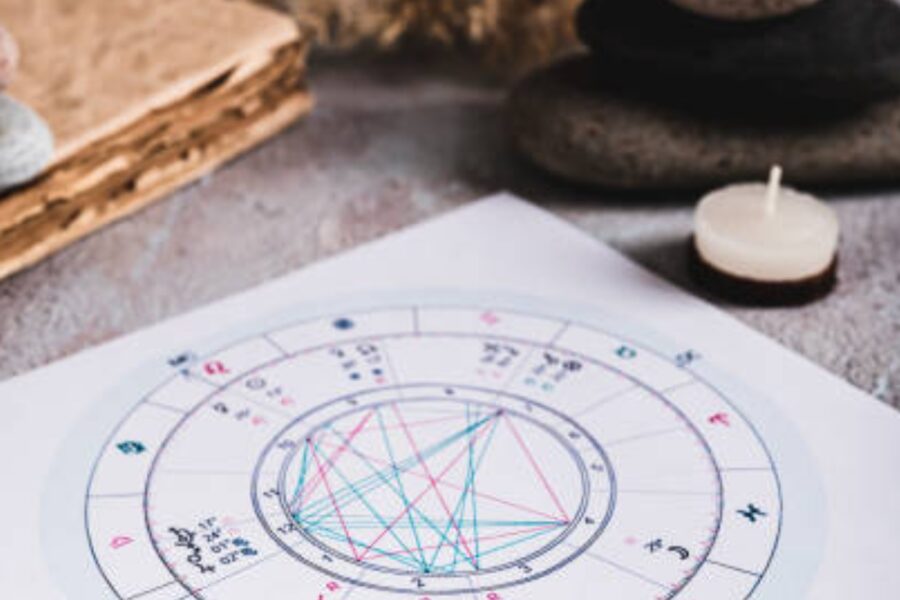
Your birth chart is a snapshot of the sky at the exact moment you were born. Think of it as a cosmic blueprint — a map that shows where every planet was positioned relative to Earth when you took your first breath. Astrologers use this map to understand personality, timing, strengths, challenges, and purpose.
The good news: you don’t need years of study to start reading yours. You just need to know where to look and what the pieces mean.
Step 1: Generate Your Free Birth Chart
You’ll need your birth date, birth time (as exact as possible), and birth location. Then use our free tool!
If you don’t know your birth time, use noon as a placeholder — but be aware your Rising sign won’t be accurate without an exact time.
Step 2: Understand the Big Three
Before diving into the full chart, start with your Big Three — the three placements that shape your core identity:
Your Sun Sign
This is what most people mean when they say “I’m a Scorpio.” Your Sun sign represents your core self, your conscious identity, and the energy you’re here to embody. It’s the sign the Sun occupied on your birthday.
Your Moon Sign
Your Moon sign reflects your emotional world — how you feel, what you need for security, and your instinctive reactions. Many people relate more strongly to their Moon sign than their Sun sign, especially in private or emotional situations.
Your Rising Sign (Ascendant)
Your Rising sign is the zodiac sign that was on the eastern horizon when you were born. It governs your outward appearance, first impressions, and how the world perceives you. This is why two people with the same Sun sign can seem very different — their Rising signs shape how that Sun energy is expressed.
Step 3: Learn the 12 Houses
The birth chart wheel is divided into 12 sections called houses. Each house governs a specific area of life. The sign on the cusp of each house — and any planets inside it — tell you how that life area plays out for you.
- 1st House — Self, appearance, first impressions
- 2nd House — Money, possessions, values
- 3rd House — Communication, siblings, local travel
- 4th House — Home, family, roots
- 5th House — Creativity, romance, pleasure
- 6th House — Health, daily routines, work
- 7th House — Partnerships, marriage, contracts
- 8th House — Transformation, shared resources, the occult
- 9th House — Philosophy, higher learning, travel
- 10th House — Career, reputation, public life
- 11th House — Community, friendships, future goals
- 12th House — The subconscious, hidden matters, spirituality
Step 4: Read Your Planetary Placements
Every planet in your chart sits in a zodiac sign and a house. The sign tells you HOW that planet’s energy expresses itself. The house tells you WHERE in your life it plays out.
For example: Venus in Scorpio in the 7th House means your approach to love and beauty (Venus) is intense and deep (Scorpio), expressed primarily through close partnerships (7th House).
Start with the personal planets before moving to outer planets:
- Mercury — how you think and communicate
- Venus — love, beauty, what you value
- Mars — drive, action, anger, desire
Step 5: Look for Patterns
Once you’ve identified your placements, look for recurring themes. Do you have multiple planets in water signs? You’re likely deeply intuitive and emotionally driven. A stellium (3+ planets in one house)? That area of life is highly activated for you.
Your Journaling Exercise
After reading your chart, write about these three things:
- Does your Sun sign feel true? Where does it show up in your daily life?
- How does your Moon sign reflect your emotional needs — especially in relationships?
- What house has the most planets? What does that area of life feel like for you?
Your birth chart is not a fixed destiny — it’s a language for self-understanding. The more you sit with it, the more fluently you’ll speak it.